[Return to Expect Resistance Main Page]
Reviews of Expect Resistance
“In 1967, the year before riots and unrest brought France to the edge of revolution, Raoul Vaneigem, a key member of the Paris-based Situationist International, wrote: ‘People who talk about revolution and class struggle without referring explicitly to everyday life, without understanding what is subversive about love and what is positive in the refusal of constraints, such people have corpses in their mouths.’Forty years later, no one can accuse the CrimethInc. Collective of having corpses in their mouths.
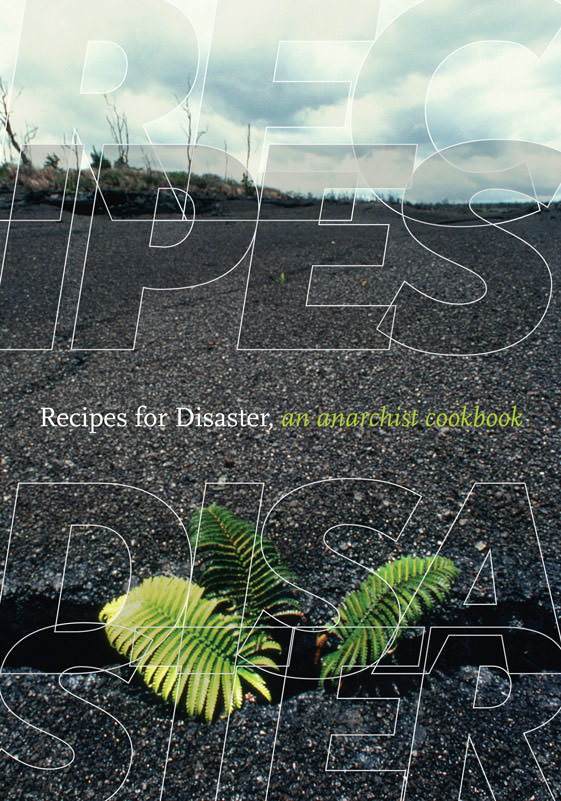
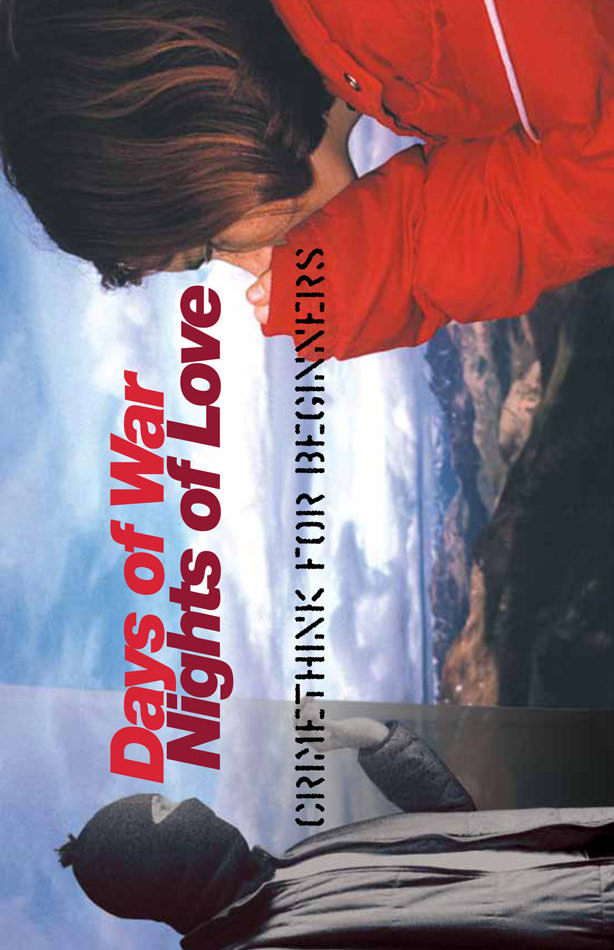
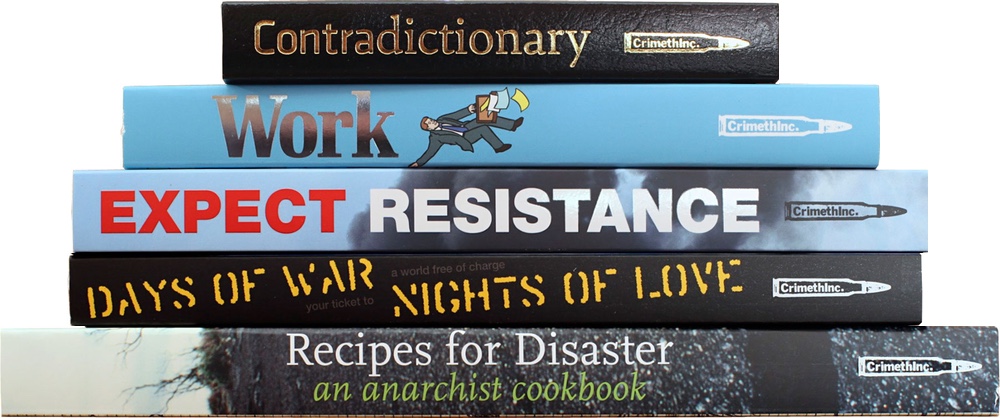
“Their latest book, Expect Resistance, is a passionate call for readers to see revolution as a daily event, rather than as an abstract idea that may never be realized. Expect Resistance follows Recipes for Disaster: An Anarchist Cookbook and Days of Love, Nights of War in developing the crimethink philosophy of liberated living and fiery opposition to capitalism and injustice. Like CrimethInc.’s others works, Expect Resistance is beautifully presented, illustrated with everything from drawings of a post-apocalyptic world, to fake New York Times covers to actual photographs of fence-smashing demonstrations. The self-described ‘decentralized anarchist collective’ lists no author names on its publications to give credibility to the idea of collective action.
“One half of Expect Resistance, printed in red ink, is a fictional narrative that follows Marshall, Pablo and Samia as they leave their conventional lives and jobs to pursue a life of radical activism. The three meet during an occupation of a university, protesting both sweatshop labor and the working conditions of low-paid university workers. They go on to fall in and out of love and confront capitalism and injustice head-on.These fictional episodes alternate with chapters printed in black ink covering crimethink theory. While critics may deride the CrimethInc. model as “lifestyle anarchism” (as opposed to the more politically rigorous ‘social anarchism’), these theoretical sections successfully bridge the gap between the personal and the political.
“Everything from different models of consensus- making to the ethics of adultery is covered here in engaging and provocative prose. What gives the book its particular force is the correlation between the fictional and theoretical sections. A chapter on ‘Crowd Dynamics and the Mass Psychology of Possibility’ is followed by a description of a ‘Reclaim the Streets’-style protest where Pablo and other anti-sweatshop campaigners take over a busy road in the face of police opposition. By intertwining theory with fiction, radical political ideas become tools for immediate use. Expect Resistance delves into the complexities, consequences and pitfalls of radical activism in a way that other celebratory books about the anti-capitalist movement (such as the otherwise excellent Globalize Liberation, edited by David Solnit) have shied away from.
“After the success and euphoria of the university occupation, the group of friends and allies that spawned it fall apart in an all too predictable mess of in-fighting and factionalism. In one of the book’s strongest theoretical sections, ‘Failure,’ this recognition of imperfection is presented as a necessary and even inspiring step: ‘True failure, tragic and heartbreaking as it is, is proof that you’ve reached beyond yourself, that you are pushing at your own limits and the limits of the world.’ Reaching for the impossible and failing becomes the perfect antidote to a culture that values the petty successes of money and careerism.
“In the end, CrimethInc. tells us that it is possible to win. The ‘Afterward’ section presents both a manifesto for Maximum Ultraism, where ultraists ‘wage a life-and-death war against consensus reality’ (injustice that only exists with the consent of the majority) and a portrait of a post-capitalist world where grocery stores are replaced with gardens and cough syrup with licorice root. Even if none of this happens, the book declares, ‘we will have the adventure of our lives.’ Expect Resistance presents an ideal reminder for jaded activists that a life of opposition does not have to be a life of frustration. And while not every reader will have the luxury or opportunity to become a full-time revolutionary like Pablo, Marshall and Samia, it also reminds us that the fight for meaningful change begins on the battlefield of everyday life.”
The Indypendent, written by Harry Thorne, August 2008 #124
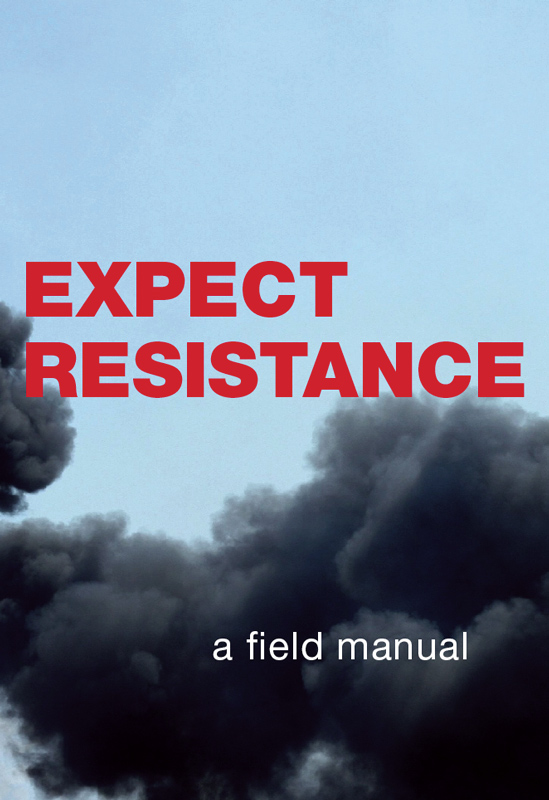
“Perhaps the most ambitious CWC manifesto yet emerged this past spring in the form of Expect Resistance: a field manual (ER). When I first perused the book’s format, the innovative anti-structure intimidated me; later, it intoxicated me.
“The CWC web site provides an indispensable description of what ER actually intends, and I needed its explanation to expunge confusion. For example, any reader needs to understand the text’s innovative structure as ‘three books” within one, ‘each of which may be read as a complete work unto itself.’ Basically, one book resembles Days of War, Nights of Love and includes ‘improved versions of . . . [CWC] material from 2000 to 2004.’ The other book (distinguished by its red ink) appears to be an anarchist novel about ‘the adventures and tribulations that inevitably ensue when people pursuing their dreams enter into conflict with the world as it is.’ The third book, then, is the combination of all of the above.
“After digesting the official blurb as one might read driving directions downloaded before a long trip, I finally began the adventure of reading ER cover-to-cover, taking notes along the way. I hated (and then loved), loved (and then hated) the book. At last, I appreciated ER and admired the people who made it.
“Unfortunately, the title misleads; the phrase ‘expect resistance’ was a CWC sticker before it was a book and cannot convey the many flavors of prose within. Tacking on the ‘field manual’ tag only makes matters worse because this book is a fierce manifesto and a marvelous fantasy; not a field manual of any kind—not even for ‘the field where all manuals are useless,’ as it claims.
“ER’s experimental structure is finely polished and ferociously pursued. The ‘red letter’ memoir/novel—‘neither a true story nor a work of fiction’; ‘ a chronicle of things that are going to happen’—employs multiple narrators and weaves in and out of overlapping scenarios in the manner of a Robert Altman film.
“Three primary characters are temporary comrades whose tales depict of the details the best and worst of activist cultures and projects. Whether narrating a direct action, a prisoner’s desperation, or the differences between cheating and polyamory, the story lines invoke the emotional geography that has always made the anarchist scene an intensely intoxicating and insidiously infuriating world to inhabit. Narrators Marshall, Pablo, and Samia each felt real enough to fall in and out of love with on multiple occasions.
“At times, the race, gender, and class politics seem so savvy as to border on a defensive political correctness perhaps used to stave off another wave of the ‘arrogant middle-class white kids’ backlash. Since the black ink sections are vintage CWC in terms of epic proportion, insistent proclamation, and impeccable production, when the memoir/novel slipped out of showing and into shouting, it left this reader frustrated.
“At the end, ER leaves an overwhelming impression of a quasi-biblical illuminated manuscript to be studied and quoted, chapter and verse, by its inspired converts. The inner front-cover-flap claims that the book will do nothing less than invert the creation myth, reverse God’s judgment, and give apples to snakes, thus invoking the ‘release of nature from the yoke of human will.’
“With Recipes for Disaster, CWC rewrote the Anarchist Cookbook; with ER, it’s more like they uncovered the future scrolls of an anarchist bible. (the pages with red words reminded me of the movement of ‘red letter Christians’ who privilege the alleged words of Jesus over the rest of their ‘field manual.’) Even if ER is just a sacred text of science fiction, it’s a highly readable, enlightened, and insightful 350 page epistle. Nothing lacks in either beauty or message on all counts.
“Even at its most excessive, CWC writing represents writers all too attuned to the partial power of rhetoric. Discussing the perimeters of theory, ER owns up to its own blind-spots in a particularly acute footnote: ‘Ideology creeps quickly into any language, languages that seek to oppose it no less. If you want to experience passion and liberty, the last thing you want to do is make up slogans about them.’ Of course, this is hilarious—because like everything CWC has ever done—ER is a cup that overflows with clever and pithy made-up slogans about passion and liberty on almost every page!
“The collective author continues: ‘This footnote itself is a pernicious little thing, just more abstractions about abstractions—put the book down, stop conceptualizing, get out there and live, whatever that means!’
“Even though CWC has changed since the early days when the Inside Front punk magazine or the tabloid Harbinger were first published, ER contains enough energy to turn on the dazzling lights of previous CWC manifestations.”
Fifth Estate, Summer 2008 #378
“Six years after the seismic Days of War, Nights of Love was first published, CrimethInc. are back with a third book, longer, deeper, higher and heavier. Expect Resistance is a collection of previous texts (most notably from Harbinger)—reedited, rearranged and expanded with great care and attention to detail—interwoven with personal accounts from the living, breathing world of radical political activists . . .
“The graphics are, as always, clean, emotive image bank photographs or bold, screaming bitmaps, deeply associative for dramatic effect. The overall quality of the book, from layout to binding to inks to image registration, could only be compared to that of heavy art tomes, and clearly reflects a love for the craft that measures on the Richter scale . . .
“The intrinsic tension defining CrimethInc.—between immediatism and realpolitik—is not resolved in this book, though I suspect it’s as close as they’ll ever get. This is Crimethinc at their very best, crystallized . . .”
All in all . . . this is an intelligent, incisive and beautiful book.
excerpted from Last Hours , Summer 2008 #17
$10
Add to Cart
[Wholesale copies are $6 each]
Early versions of many of the texts in
Expect Resistance can be
found in our Reading Library.
“A passionate call for readers to see revolution as a daily event, rather than as an abstract idea that may never be realized.”
“Nothing lacks in either beauty or message on all counts,”
“Longer, deeper, higher and heavier.”
“The overall quality of the book, from layout to binding to inks to image registration, could only be compared to that of heavy art tomes, and clearly reflects a love for the craft that measures on the Richter scale.”
“Everything from different models of consensus-making to the ethics of adultery is covered here in engaging and provocative prose.”
“By intertwining theory with fiction, radical political ideas become tools for immediate use. Expect Resistance delves into the complexities, consequences and pitfalls of radical activism in a way that other celebratory books about the anti-capitalist movement have shied away from.”
“Reminds us that the fight for meaningful change begins on the battlefield of everyday life.”
“An ideal reminder for jaded activists that a life of opposition does not have to be a life of frustration.”
“A highly readable, enlightened, and insightful 350 page epistle.”
“Epic proportion, insistent proclamation, and impeccable production.”
“What gives the book its particular force is the correlation between the fictional and theoretical sections.”