October 19, 2010 at 8:40 am · Filed under Read All About It, posted by b. traven
-
We just received this inspiring and instructive report from anonymous comrades in Russia, describing two years of struggle against logging operations in one of the major forests near Moscow. The struggle culminated this summer in the “Khimki battle,” in which several hundred armed antifascists and anarchists attacked a government building in suburban Moscow; the authorities responded in kind, and subsequent solidarity efforts in Belarus provoked further repression.
Most of the links in this text lead to Russian-language pages; those too busy to teach themselves Russian can at least plug the website addresses into Google translate and struggle through computer-generated translations.
Read on after the break.
October 14, 2010 at 2:17 pm · Filed under Read All About It, posted by b. traven
-
A tremendous amount of attention has focused on Greece lately. Looking at the successful anarchist movement there, we can nurture utopian visions to strengthen our resolve; but if we only consider apparent success stories, we will not be prepared for the challenges ahead.
The entire Balkan peninsula is a sort of laboratory of crisis. Studying it, we can discern some of the possible futures that may await us now that North America seems to be entering an era of crisis as well. The vibrant anarchist movement in Greece represents one possible future, in which a powerful social movement establishes hubs of resistance. But only a few hundred kilometers north Serbia shows another: a nightmare of ethnic conflict, nationalist war, and false resistance movements in which the anarchist alternative has sunk almost as deep as Atlantis.
The roots of the differences between these countries are hundreds of years old, but we can identify some recent factors. Only a generation ago, both were ruled by dictatorships: Greece by a US-based fascist dictatorship that collapsed under pressure from rebellious students, winning youth revolt the respect of the general population to this day; Yugoslavia by a socialist dictatorship, in which Tito maintained power by playing various groups off against each other. When the Berlin Wall came down and the socialist government collapsed, the country was torn apart by ethnic strife. By the end of the 1990s, Serbia was reduced to a much smaller nation ruled by a nationalistic communist, Slobodan Milošević.
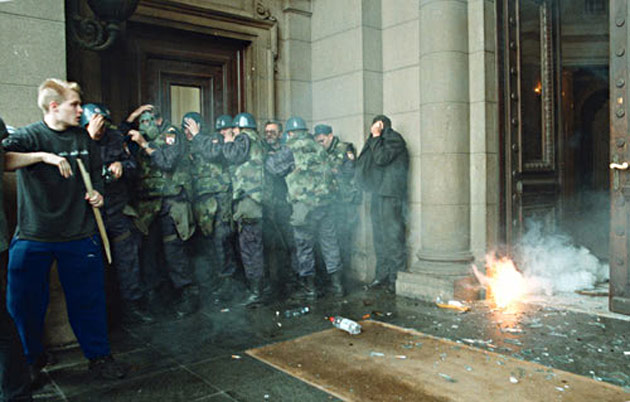
On paper, what happened next reads like an anarchist fairy tale. An ostensibly decentralized and nonhierarchical underground youth group named Otpor (“Resistance”) carried out a propaganda campaign aimed at rousing popular revolt, despite aggressive repression from the authorities. After a rigged election, hundreds of thousands of people converged on the capital and intense streetfighting ensued. An unemployed vehicle operator, nicknamed “Joe” by his colleagues, drove his bulldozer through a hail of bullets into the headquarters of the state television station at the head of a furious crowd. Other protesters set the Parliament on fire and violently wrested control of the streets from police. The authorities surrendered, the government toppled, and soon a former anarchist was prime minister.
More history, commentary, an in-depth interview and appendices after the jump.