Rolling Thunder #8 Is Here!


At long last, Rolling Thunder #8 is back from the printer!

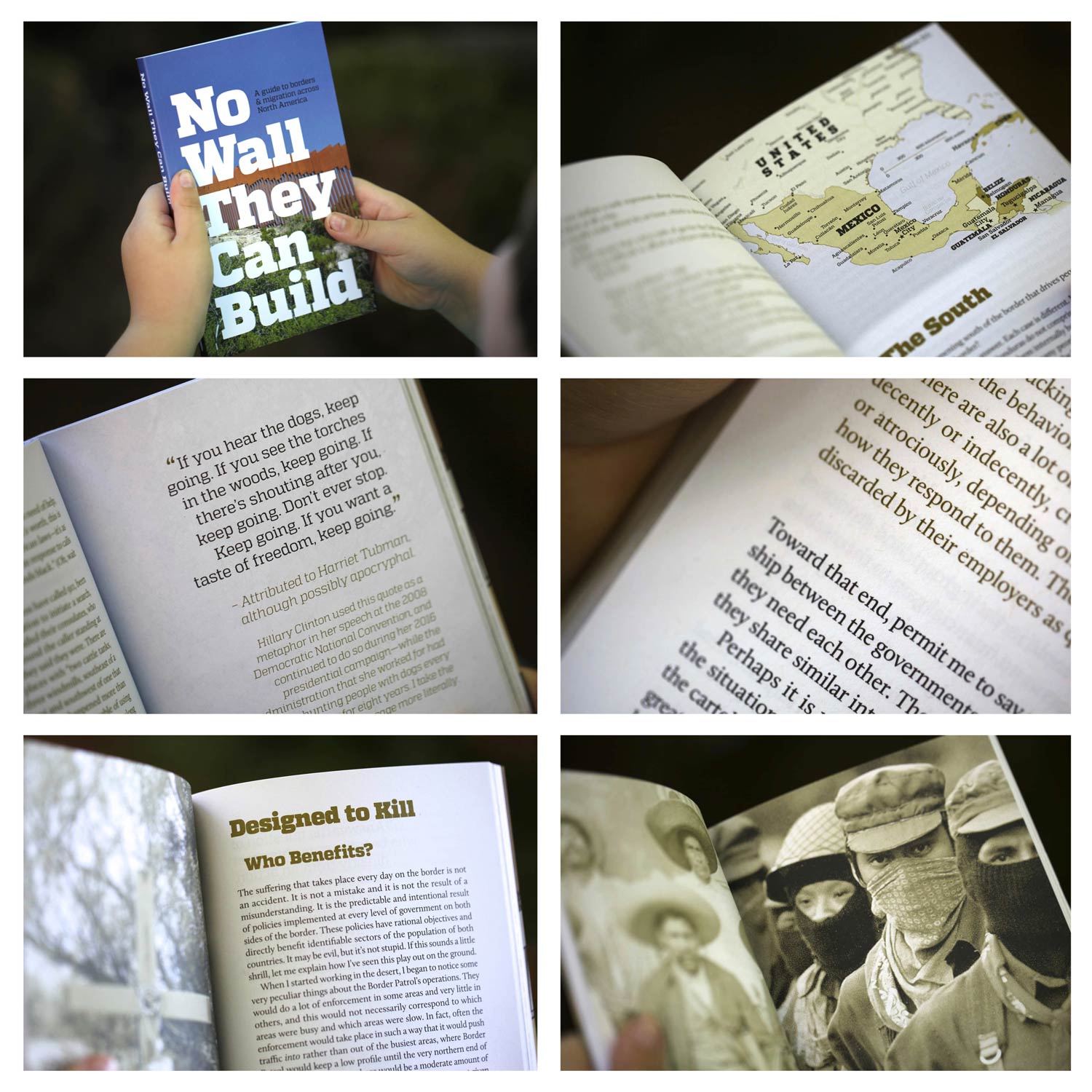
Balancing out the previous issue’s focus on breaking news, this issue steps back to reflect on the priorities and relationships that can make resistance effective and infectious. The centerpiece of this issue is a critical examination of the strengths and shortcomings of contemporary insurrectionist theory and practice, spanning 24 pages and a wide range of lines of inquiry. Elsewhere herein, one can find a guide to crafting constructive accountability processes, a survey of the past four decades of anarchist activity in Chile, and a report from San Francisco exploring the broader context of anarchist organizing leading up to and following the Oakland riots covered in Rolling Thunder #7. We’ve also turned up a retrospective by a member of the legendary clandestine prison abolitionist group Os Cangaceiros, distilling the lessons of years of underground struggle. All this is rounded out by inspiring accounts, entertaining anecdotes, magical realist fiction, and a whole lot more. Also, just a reminder that subscriptions are now available, and starting your subscription now, beginning with #8, is an option.
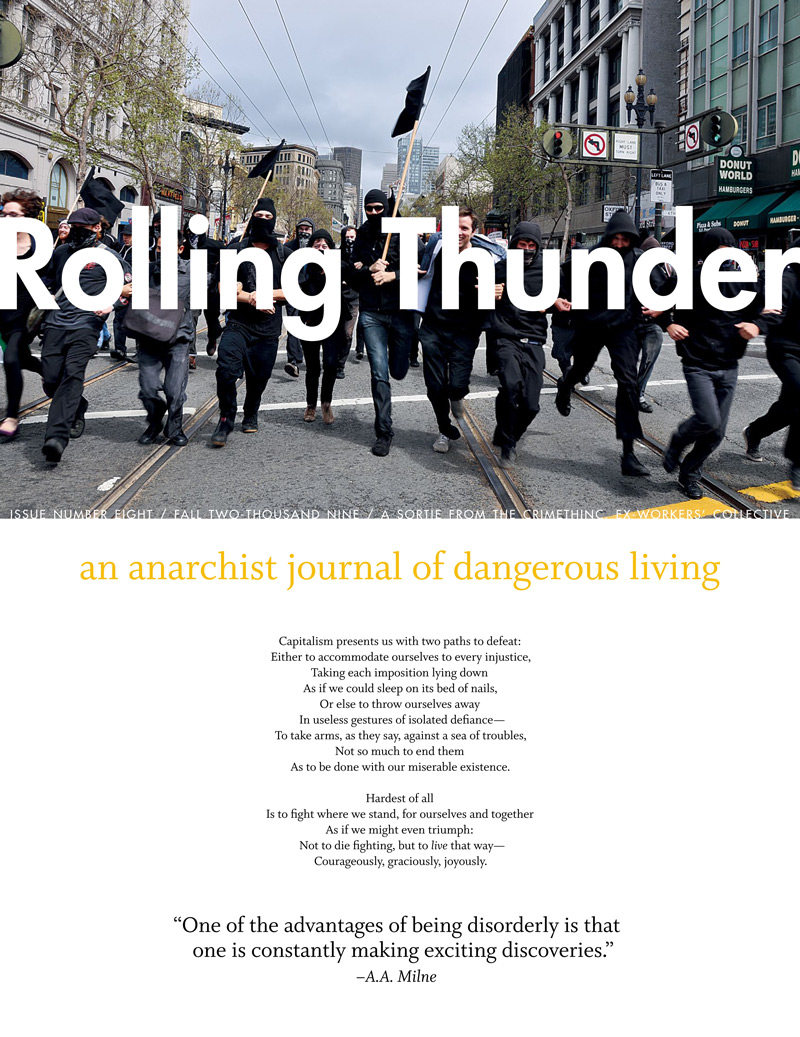
We’ve also composed a new poster to celebrate its arrival and convey one of the themes of the issue.

b. traven said,

October 11, 2009 @ 12:05 am

Just in case anyone else finds this equally entertaining, here’s a hilarious Google translation of a Dutch review of the documentary about the squatting movement also reviewed in this issue of Rolling Thunder. “Cracker” is a literal translation of the Dutch term for squatter.

De Stad Was Van Ons

The autumn of 1988 will be remembered by many active Amsterdam cracker gegriefd as a period of internal trouble. After a group of squatters pound, which itself haughtily Political Wing Kraak Movement said, over the years a lot on stilts had put through the dissemination of posters traitor, “” traitor brochures and actual physical attacks on “traitors of the squatters’ movement ‘, culminated their fight in an orgy of violence with the deployment of direct control over the cracking cafe in the First Aid Oosterpark Area.

These were the last convulsions of the cracking knock. A hundred crackers, there was need for a vulgar street fighter the heavyweight group, led by Theo van der Giesen, battered by the cracking stage disappear. End show. With this incident, where no pictures of available ends the documentary The city was one of us, composed by Joost Seelen. Without any prior knowledge may be a confusing end of a film which is about power within the squatters movement.

Who according to the subtitle of the film – a film about the Amsterdam squatters’ movement 1975-1988 ‘- think carefully documentary to get the cracker culture over that period, is disappointed in the cinema hall. As for the cracked attend the many critical social individual means, is barely addressed. It is Joost Seelen to do to make it, partly because the squatters movement itself created image of an open spontaneous movement without leaders, to prick. Indeed, a number of key moments, the squatters’ movement is manipulated by a small group of people.

On the basis of discussions with various stakeholders of the ‘essential’ moments, such as an evacuation in the ME-Kinkerbuurt in’78, the cracking, defense and legalization of the Groote Keyser, the Free State in the Vondelstraat the coronation Riots and fighting to cracking cafe First Aid, is the neutral viewer’s nose in the facts: The squatters’ movement had leaders, followers, renegades and abandonment.

Besides Theo were in most other areas, except the Nieuwmarkt, Grachtengordel and Pipe, but people who dictated the fight as it went to class. Van der Giesen can be regarded as the coordinator of this leading company. Theo van der Giesen, from the GML (Group Marxists-Leninisten), therefore acts as a thread throughout the documentary.

The way he is now almost twenty years after his arrival in the squatters movement in the film looks back on his past action, Theo makes his image of “nothing and nobody ruthless drammer ‘more than true. He may today than to have his life wear as diving instructor in the Antilles, of his fight provocative methods of yesteryear, making him in some circles even police provocateur was since, he has no millimeter away.

By his intimidating behavior towards renegades to talk, he himself in the film several times ruthlessly undermined. The viewer gets the impression this one to be a highly driven a radical political activist but also a man with a loose wire. It is in this context perhaps better that Joost Seelen the dubious role of Theo and Jack in important events such as noolympics in Lausanne and the fire in Kedighem left unexposed.

The film tells cracker Joost, was opposed to the legalization of the Groote Keyser stronghold, he one morning in’80 of his bed was compromised by a cracker knokploeg led by Theo. Joost, as a number of squatters was forced to take the basement of the Groote Keyser. The steel went to the door, and the hostage squatters were taunted, beaten and bespuugd. Theo playing this event by clearly stating that people were invited for an interview and were treated nicely.

Direct response to this hostage-taking practice, the legalization of the Groote Keyser. Some cracking pound, including Theo, was behind the back of the squatters to move concocted that the houses on the Keizersgracht were bought by the municipality. At that time a very sensitive issue within the movement. From anger became a recognized group of people, including a number of original residents, the basement, there was a wild party and destroyed the furniture of the just established kraak-/infocentrum.

The lepelde been talked about cracking events in the film is reduced through discussions with a four to five directly involved in that time. Theo gets in the film only support of his buddy Jack van Lieshout, who is also clear that he winds his occasionally nauseating action past talks. Says cracker Jan abducted to be a result of skirmishes around the cafe First Aid. He is the Political Wing Kraak Movement (PVK) tied to a chair, while Jack he holds a current bolt. ‘Now tell you the names and addresses of your friends who work against us in the First Aid, otherwise you gonna’, then he would have said.

The city was our focus on the political and organizational basis of the squatters movement. The story follows the movement in its struggle to conquer their own space, how the violence are up, how Theo built up its cracking rich and self slowly erodes and finally, the violence turned inward. The viewer will subconsciously demand forced how it is possible that a person like Theo van der Giesen much milk in the break has been in a very anti-authoritarian movement.

In my eyes, this was because he, along with his radical buddies, at the right time and place aanklopte under the motto of ‘we need something done now! “, At those moments that something had to happen. This happened for example in a Groote Keyser (where the residents were hit an impasse because of the eviction threat) to a knokploeg action against the Lucky Luyken and one of the umpteenth re-touch actions Singel 114.

The home was for Theo Staatsliedenbuurt, then – glaring enough for Theo itself – the area with the highest number of beer punks. In this neighborhood were Theo, Jack and what is not to be called people on their throne. There were many notable urban housing cracked in this neighborhood over the bridge ‘, the cracking group was the strongest of the city.

But Theo wanted more power, the neighborhood he was too small. In the film he does it come as a result his policy was also cracked in neighborhoods like East, the Grachtengordel, Nieuwmarkt and Pipe. Nothing is less true. The people, for example the late seventies, early eighties were active in the city, know better. They knew Theo and associates often as troublesome meddler who came trot when confronting something on the agenda. Then Theo came with his brommertje aangescheurd, with his wake, among a horde of beer punks from the State. ‘Agency Staatsliedenbuurt’, it was this phenomenon called banter.

The power that Joost Seelen in his film toebedeelt to Theo, is also somewhat exaggerated. In addition to Mr Van der Giesen were in most other neighborhoods, people with conducting a political struggle against the housing and speculation. However, he was seen by many as a hero. Where decisive action had to be, was Theo priority. How much his appearance was revealed in a street incident in’88. Theo was the one place in his own fifty opponents from the squatters’ movement to the streets to hunt.

The film also gives the impression though, after the inevitable retreat of Theo and associates in’88, with the recent political movement cracking. That is incorrect. In several neighborhoods of today are still organized cracked, all this sort operations have little effect. But that was already so far before the throne were PVK’ers their explanations. Patterns which since’88 by several other people were briefly occupied, but now are as good as empty. Keep it up.

The filmmaker wonders how enthusiastic and passionate people to come to fight their former comrades eventually as their greatest enemies to consider. This question is not so difficult for insiders to answer, in the movie also had its place. There is in ‘The city was our one big gaping hole between the re-tap of the Lucky Luyck (’82) and the final blow for PVK (’88).

The strong motion cracking of the late seventies, early eighties, had enough gestaalde frameworks which Van der Giesen’s militant struggle from maps could run. Also, there was sufficient scope for others to self-organize without the actions to avoid the influence of certain dominant types. Only when the squatters movement declined – partly due to the violent conflict between government and cracking initiative legalizing squatted important and growing individualisation – were you more or less forced joint action.

After it appeared that people outside the Staatsliedenbuurt not had such a willing ear to the views of Van der Giesen and co., Created the problems. Important squatted as Wijers and Singel 114 largely determined their own course. That was against the sore leg of Theo and Jack. It is in this period when the squatters in the Staatsliedenbuurt hardly played any significant role that Theo and Jack a new ‘urban’ squatters’ movement in legs wanted to continue.

They were only crackers welcome firmly on their legs were a militant political and wanted to perform. For ‘meal diaries, squatters themselves alternative design companies, was no place. The PVK saw itself as the foremost task of cracking refining movement of undesirable elements. This was accompanied by the necessary mental and physical violence towards the renegades and traitors “(such as those under arrest after hearing a press statement).

At first they were not “fight their former comrades of yesteryear who contested the PVK, but new squatters who have stood up for their supporters intimidated. For them was enough. The squatters’ movement announced in the autumn of’87 a boycott of the PVK, which have only in the State and East were welcome. The Hague Journal Black was their mouthpiece. Only after the PVK is turned against a special evening to set up women’s cafe in the First Aid, it was really out of hand. Grace blow to the ‘Stalinists’ was associated with a orgy of violence, particularly on the part of the PVK’ers. Squatters on the street were beaten up, left-radical shops went to rubble.

The filmmaker says the film itself is not made to have the squatters movement, but a film. It is admirable that Joost Seelen which the production was assisted by the State Archive, has chosen a controversial issue as the power struggle within the squatters movement. Although this Friday predictable work with the replication of decisive events on the basis of interviews, he is not guilty of sensationalism time.

The result is a valuable document of a unique radical social and political struggle against the housing. The talks bore no moment. The interviewees talk openly about their experiences of time without being on the right breast. This provides some delightful images. It is highly amusing to a number of original inhabitants of the Groote Keyser, which is considered to be known as the cracking stronghold of the movement, to hear talk about how they have occupied the buildings. Genuine naivety which the squatters’ movement so unique. To eat.

Alex van Veen

RSS feed for comments on this post · TrackBack URI

Leave a Comment

You must be logged in to post a comment.